Breast Augmentation
The ultimate 2026 guide to breast augmentation in Dubai and Abu Dhabi. Learn about gummy bear silicone implants, the Internal Bra technique, Dual Plane placement, costs, and recovery with Brazilian Board-Certified Plastic Surgeon, Dr. Paulo.
Book Your Appointment
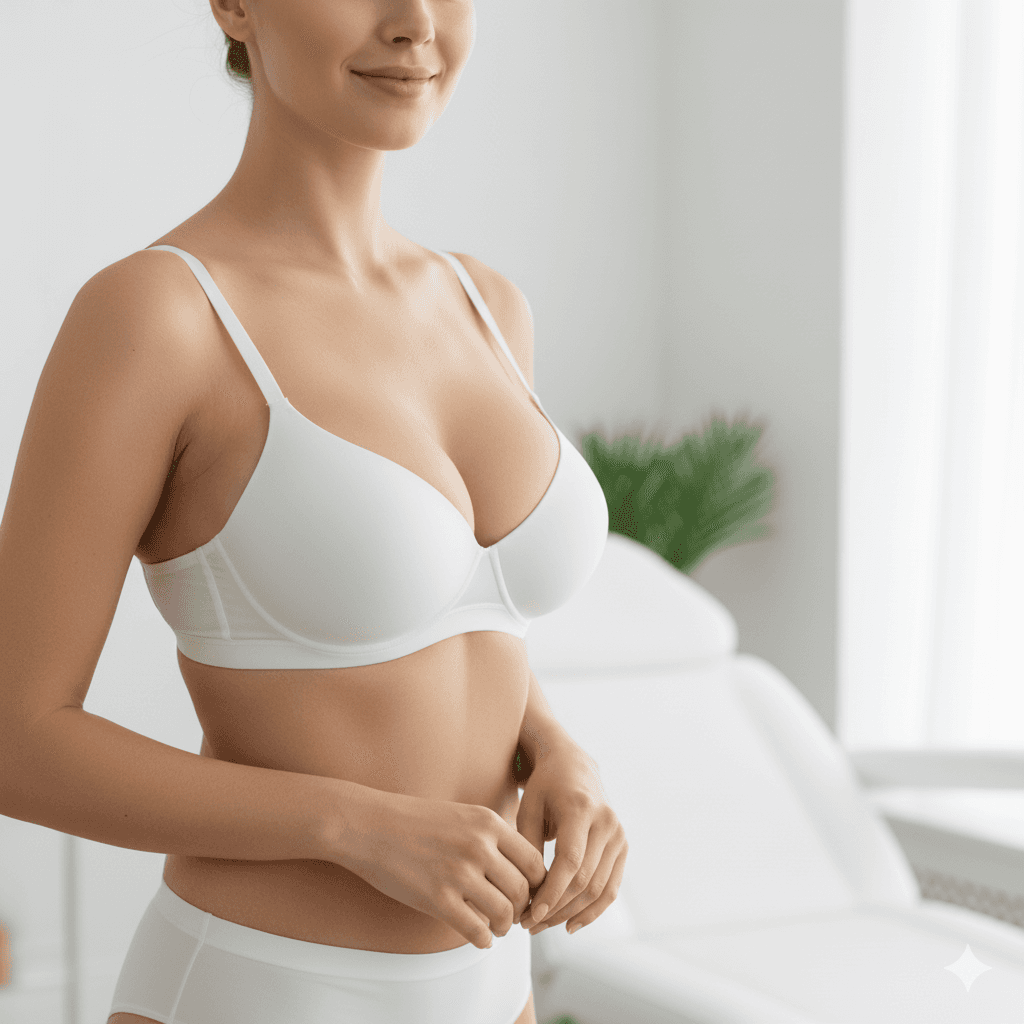
The Complete Guide to Breast Augmentation in Dubai & Abu Dhabi: Implants, Techniques, and Recovery
Quick Answer & Executive Summary
What is Breast Augmentation? A cosmetic surgical procedure (augmentation mammoplasty) designed to enhance the size, shape, and symmetry of the breasts using medical-grade implants or fat transfer.
Best Implant Type: Cohesive silicone gel implants (often called "Gummy Bear" implants) from premium brands like Motiva, Mentor, or Polytech. Saline is rarely recommended due to unnatural feel and rippling risks.
Top Surgical Techniques: The "Dual Plane" placement (partially under the muscle for natural slopes) combined with the "Internal Bra" suturing technique (to prevent long-term sagging or bottoming out).
Recovery Timeline: Fast-track recovery allows patients to return to light desk work in 3 to 5 days, and resume full physical activities and swimming in 4 to 6 weeks.
Safety & Longevity: When performed by a Board-Certified Plastic Surgeon, the complication rate is exceptionally low (<1%). Modern implants do not have a strict "10-year expiration date" and only require replacement if complications arise.
Average Cost Factors: Prices in Dubai and Abu Dhabi depend on the clinic's premium status, the surgeon's expertise, implant technology, and whether a Breast Lift (Mastopexy) is performed simultaneously.
1. Introduction: The Art and Science of Breast Enhancement
Breast augmentation is consistently one of the most popular and transformative cosmetic procedures worldwide. However, achieving a result that looks beautiful, feels natural, and lasts for decades requires more than just inserting an implant—it requires profound anatomical understanding and artistic vision.
Under the care of Dr. Paulo, a Brazilian Board-Certified Plastic Surgeon operating in Dubai and Abu Dhabi, breast enhancement is tailored to your unique frame. Utilizing the most advanced surgical protocols available today, we ensure not just volume, but perfect proportion, symmetry, and uncompromised safety.
2. Are You the Ideal Candidate?
Breast augmentation is a deeply personal journey. You are likely an excellent candidate if you relate to any of the following:
Micromastia (Naturally Small Breasts): You feel your breasts are disproportionately small for your body frame and wish to enhance your curves.
Post-Pregnancy Volume Loss: You have experienced "deflation" or loss of upper-pole fullness after breastfeeding or significant weight loss.
Asymmetry: One breast is noticeably different in size or shape than the other.
Health & Expectations: You are in good general physical health, maintain a stable weight, and have realistic expectations about the surgical outcomes.
3. The Consultation Journey: Designing Your Results
Your journey begins with a comprehensive, bespoke consultation. Dr. Paulo does not believe in a "one-size-fits-all" approach.
During your appointment, you will experience:
Clinical Assessment: Precise measurements of your chest width, existing breast tissue base, and skin elasticity.
3D Simulation Technology: We utilize advanced imaging to create a 3D model of your body, allowing you to visually "try on" different implant sizes and profiles before making a decision.
Collaborative Planning: You are encouraged to bring reference photos. Together, we will define your ideal aesthetic—whether that is a subtle, athletic enhancement or a more glamorous, full-cleavage look.
4. Implant Masterclass: Materials, Profiles, and Sizes
A. Silicone vs. Saline
Cohesive Silicone Gel ("Gummy Bear"): The absolute gold standard. These implants hold their shape, mimic the natural density of breast tissue, and offer the lowest risk of visible rippling. We exclusively recommend premium silicone (Motiva, Mentor, Polytech).
Saline Implants: Filled with sterile saltwater. While safe, they are prone to rippling, feel less natural, and are generally not recommended in our premium UAE practice.
B. Implant Profiles (Projection)
The "profile" determines how far the implant projects outward from your chest.
Moderate/Low Profile: Wider base, less projection. Ideal for a wider chest and a highly subtle, natural look.
High Profile / Extra High Profile: Narrower base, more forward projection. Ideal for creating a rounder upper breast and deeper cleavage, especially on petite frames.
C. Volume (CCs)
Implants are measured in cubic centimeters (cc). Rather than focusing purely on a cup size (which varies by bra brand), Dr. Paulo selects the exact CC volume that harmonizes with your specific chest measurements to ensure the tissue can safely support the implant.
5. Advanced Surgical Techniques
To guarantee long-term stability and a natural appearance, Dr. Paulo utilizes a combination of advanced techniques:
Incision Pathways (Where the scar will be)
Inframammary Fold (Under the Breast): Our highly preferred method. A discreet 2-4cm incision hidden in the natural crease under the breast. It provides the best visibility for the surgeon, minimal scarring, and completely preserves nipple sensation and milk ducts for future breastfeeding.
Transaxillary (Armpit): Leaves no scar on the breast itself, performed via endoscopic video surgery.
Periareolar (Around the Nipple): Not recommended unless combined with a breast lift, due to higher risks of sensation loss and damage to milk ducts.
Implant Placement (The Dual Plane Advantage)
Subglandular (Over the Muscle): Placed directly behind the breast tissue. Only suitable for patients with a significant amount of existing natural breast tissue to cover the implant.
Submuscular / Dual Plane (Under the Muscle): The Gold Standard. The top half of the implant sits beneath the pectoral muscle, creating a smooth, natural downward slope. The bottom half sits under the breast gland, allowing natural movement. This technique drastically reduces the "fake, stuck-on" look and lowers the risk of capsular contracture.
Signature Technique: The Internal Bra
Gravity affects all breasts over time. To prevent implants from sagging or dropping too low ("bottoming out"), Dr. Paulo employs the Internal Bra technique. This involves specialized internal suturing that reinforces the lower breast fold, acting as a permanent, invisible hammock that supports the implant's weight for decades.
6. Breast Augmentation vs. Breast Lift (Mastopexy)
A common misconception is that implants alone will fix sagging breasts.
Breast Augmentation: Adds volume and fullness. It does not lift the nipple or tighten loose skin.
Breast Lift (Mastopexy): Removes excess skin, reshapes the tissue, and moves the nipple to a higher, more youthful position.
Augmentation-Mastopexy (The Combo): If your nipples point downward or sit below the breast crease, you will likely need both procedures simultaneously to achieve a perky, full result.
7. Step-by-Step Fast Recovery Timeline
Our modern surgical protocols minimize tissue trauma, allowing for a "Fast Recovery" experience.
Day 1 (Surgery Day): The procedure lasts 1-2 hours under general anesthesia. You will go home the same day. Expect tightness and mild soreness, managed with prescribed medication.
Days 3 to 5: You can return to light daily activities, showering, and remote/desk work. You must wear your specialized surgical compression bra 24/7.
Weeks 2 to 3: Swelling begins to subside rapidly. The implants, which initially sit "high and tight," will start to "drop and fluff" into their natural, softer position.
Weeks 4 to 6: You are officially cleared to remove the surgical bra, switch to standard (non-underwire) bras, and resume full cardiovascular exercise, weightlifting, and swimming.
Months 3 to 6: The breasts have fully settled into their final shape, and scars will begin to fade significantly.
8. Long-Term Care and Safety
Lifespan of Implants
Modern cohesive silicone implants are incredibly durable. They do not expire every 10 years. You only need to replace or remove them if you experience a complication (like a rupture or severe capsular contracture) or if you desire a size change later in life.
Mammograms and Cancer Screening
Implants do not prevent you from having mammograms. However, you must inform your technician that you have implants so they can use specialized displacement views (Eklund views) to see the breast tissue clearly. Breast implants do not cause breast cancer.
Potential Risks
While our complication rate is less than 1%, all surgeries carry risks. These include:
Capsular Contracture: The body forms a hard scar tissue shell around the implant.
Infection: Extremely rare due to our strict sterile protocols.
Changes in Sensation: Temporary numbness is normal; permanent changes are rare.
9. Cost of Breast Augmentation in Dubai & Abu Dhabi
The investment for breast augmentation varies. Cheap surgery is never safe, and safe surgery is rarely cheap. Costs are determined by:
Hospital Fees: Premium, JCI-accredited facilities ensure maximum safety.
Surgeon's Expertise: Board-certified plastic surgeons with a proven track record.
Implant Brand: Next-generation implants (Motiva, Mentor) are a premium investment.
Complexity: Adding a breast lift or fat transfer (Hybrid) will increase the total cost.
We provide transparent, all-inclusive pricing during your initial consultation, with no hidden fees.
1. What exactly is breast augmentation? Breast augmentation, clinically known as augmentation mammoplasty, is a cosmetic surgical procedure designed to increase the size, enhance the shape, and improve the symmetry of the breasts using medical-grade implants or, occasionally, fat transfer.
2. Who is the ideal candidate for breast augmentation? The ideal candidate is a physically healthy woman, typically over the age of 18 (for saline) or 22 (for silicone), who maintains a stable weight, is not pregnant or nursing, and desires fuller breasts or wishes to restore volume lost due to pregnancy, weight loss, or aging.
3. Is there an upper age limit for breast augmentation? No, there is no strict upper age limit for breast augmentation. As long as a patient is in good general health, has good skin elasticity, and is cleared for elective surgery by their primary care physician, they can undergo the procedure safely in their 50s, 60s, or beyond.
4. Can breast implants fix uneven or asymmetrical breasts? Yes. It is very common for women to have breasts of slightly different sizes or shapes. A skilled plastic surgeon can correct this asymmetry by using implants of different volumes or profiles in each breast to achieve a balanced, proportionate look.
5. Will breast implants fix my sagging breasts? No, implants alone only add volume; they do not lift drooping tissue. If your nipples sit below the inframammary fold (the crease beneath the breast) or point downward, you will need a Breast Lift (Mastopexy) combined with implants to achieve a youthful, perky result.
6. Can I get a breast lift and implants at the same time? Yes. Combining a breast lift with augmentation (an Augmentation-Mastopexy) is a very common and effective procedure. It is performed during a single surgery, reducing overall recovery time and costs compared to having two separate operations.
7. How do I know what implant size is right for my body? Choosing the right size relies on precise anatomical measurements (like the width of your chest base and skin stretch), not just picking a cup size. Advanced clinics use 3D simulation imaging during consultations to scientifically determine the maximum safe volume and show you exactly how different sizes will look.
8. What is the difference between silicone and saline breast implants? Silicone implants are filled with a cohesive gel that closely mimics the natural feel and movement of real breast tissue, offering a lower risk of visible rippling. Saline implants are filled with sterile saltwater during surgery; while safe, they tend to feel firmer and look less natural under the skin.
9. What are "Gummy Bear" breast implants? "Gummy Bear" implants are a highly popular type of silicone implant filled with a highly cohesive, form-stable gel. They hold their shape extremely well, and if the implant shell is somehow cut, the thick gel does not leak out into the body—similar to a gummy bear candy.
10. What does implant "profile" mean (High, Moderate, Low)? The profile determines how far the implant projects forward from the chest wall. A Moderate or Low profile has a wider base for a subtle, natural slope. A High or Extra-High profile has a narrower base and projects further outward, creating more upper-pole fullness and prominent cleavage.
11. Are smooth or textured breast implants better? Modern safety standards strongly favor smooth or nano-textured implants (like Motiva). Heavily macro-textured implants have been linked to a rare condition called BIA-ALCL, so premium clinics have largely transitioned to smooth surfaces to maximize patient safety.
12. What is Hybrid Breast Augmentation? Hybrid breast augmentation combines smaller silicone implants with Autologous Fat Transfer (fat harvested from your own body via liposuction). The fat is injected around the implant to seamlessly cover the edges, creating an ultra-natural look and deeper cleavage without relying on an overly large implant.
13. Do breast implants expire after 10 years? No. Modern breast implants are not considered lifetime devices, but they do not have a strict 10-year expiration date. You only need to have them removed or replaced if you experience a complication (such as a rupture or capsular contracture) or if your aesthetic goals change over time.
14. Where is the incision made for breast augmentation? The most recommended incision is the Inframammary Fold (IMF), a small 2-4cm cut hidden in the natural crease under the breast. Other options include the Periareolar (around the nipple) and Transaxillary (in the armpit), though IMF is preferred for preserving nipple sensation and breastfeeding ability.
15. What is the "Dual Plane" breast implant placement? Dual Plane is an advanced technique where the upper portion of the implant is placed beneath the pectoral muscle, while the lower portion sits under the breast gland. This provides a smooth, natural downward slope at the top (hiding the implant edges) while allowing natural movement at the bottom.
16. What does "subglandular" or "over the muscle" placement mean? Subglandular placement positions the implant directly behind the breast tissue and over the chest muscle. It is typically only recommended for patients who already have a significant amount of natural breast tissue to adequately cover the implant; otherwise, the edges may be visible.
17. What is the "Internal Bra" technique in breast surgery? The Internal Bra is a specialized surgical suturing technique that reinforces the inframammary fold (the base of the breast). It acts as a permanent, internal hammock that supports the weight of the implant, preventing the breasts from sagging or "bottoming out" over the years.
18. How long does the breast augmentation surgery take? A straightforward breast augmentation usually takes between 1 to 2 hours. If the procedure is combined with a breast lift or fat transfer, the surgery time will increase to approximately 3 to 4 hours.
19. What kind of anesthesia is used for breast augmentation? Breast augmentation is performed under general anesthesia administered by a board-certified anesthesiologist. You will be completely asleep, unaware, and pain-free during the entire procedure.
20. Will I need to stay in the hospital overnight? Generally, no. Breast augmentation is an outpatient procedure. After spending a few hours in the recovery room to ensure you wake up comfortably from anesthesia, you will be allowed to go home the same day.
21. How painful is the recovery after breast implants? Most patients describe the recovery as feeling a deep muscle soreness or tightness in the chest, rather than sharp pain, similar to an intense upper-body workout. This discomfort is typically manageable with prescribed oral pain medication and subsides significantly within the first 3 to 5 days.
22. How soon can I return to work after breast augmentation? If you have a desk job or work remotely, you can usually return to work within 3 to 5 days post-surgery. If your job involves physical labor or heavy lifting, you will need to take 4 to 6 weeks off.
23. When can I start exercising again? You should start light walking immediately to promote blood circulation. However, you must avoid running, high-impact cardio, and any upper body weightlifting for 4 to 6 weeks to allow the implants to settle and incisions to heal properly.
24. How should I sleep after breast augmentation? For the first 4 to 6 weeks, you must sleep on your back with your upper body slightly elevated (using extra pillows). Sleeping on your stomach or sides too early can displace the implants and put painful pressure on the healing incisions.
25. When can I wear underwire bras and normal swimsuits? You must wear a specialized medical compression bra 24/7 for the first 4 to 6 weeks to support the implants as they heal. After your surgeon clears you (usually around week 6), you can transition to normal underwire bras and standard swimwear.
26. When can I safely fly after having breast surgery? You should plan to wait at least 7 to 10 days before taking a flight. Flying too soon increases the risk of Deep Vein Thrombosis (blood clots) and post-operative swelling due to changes in cabin pressure and prolonged periods of sitting.
27. Will breast implants affect my ability to breastfeed? In the vast majority of cases, no. By utilizing the inframammary (under the breast) incision, the surgeon avoids cutting through the milk ducts and nerve pathways surrounding the areola, thereby preserving your ability to breastfeed normally.
28. Will I lose sensation in my nipples after getting implants? Temporary numbness or hypersensitivity in the nipples is very common immediately after surgery. However, permanent loss of nipple sensation is extremely rare, especially when the inframammary incision is used. Sensation usually returns to normal within a few months.
29. What is "capsular contracture" and how do surgeons prevent it? Capsular contracture occurs when the body's natural internal scar tissue (the capsule) tightens around the implant, making the breast feel hard or look distorted. Surgeons minimize this risk by using the Dual Plane placement, a "no-touch" sterile funnel technique during insertion, and premium smooth/nano-textured implants.
30. What happens if a silicone "Gummy Bear" implant ruptures? If a modern cohesive silicone implant ruptures, it is considered a "silent rupture" because the thick gel remains contained within the scar tissue capsule; you will likely not notice physical changes. While it is not a medical emergency, the implant should be surgically replaced once detected via MRI or ultrasound.
31. What happens if a saline implant ruptures? If a saline implant ruptures or leaks, the sterile saltwater is harmlessly absorbed by the body. The breast will visibly deflate within a few hours or days. The deflated shell must then be surgically removed and replaced.
32. Can I still get mammograms with breast implants? Yes, you absolutely can and must continue routine mammogram screenings. You simply need to inform the technician that you have implants so they can use specialized "Eklund displacement views" to safely push the implant back and image the breast tissue clearly.
33. Do breast implants cause breast cancer? No. Decades of extensive scientific research and FDA reviews have shown no link between standard breast implants and the development of breast cancer.
34. What is Breast Implant Illness (BII)? Breast Implant Illness (BII) is an unofficial term used by some patients to describe a cluster of systemic symptoms (like fatigue, brain fog, and joint pain) they attribute to their implants. While not currently recognized as an official medical diagnosis by major medical boards, surgeons take these reports seriously; removing the implants (explantation) often resolves the symptoms for these patients.
35. How much does breast augmentation cost? The total cost varies significantly based on geographic location, the clinic's premium status, the surgeon's board certification, and the specific implant technology used (premium silicone costs more than saline). Combining the procedure with a lift or fat transfer will also increase the overall investment. Exact quotes require a personalized consultation.
Schedule Appointment

+971 50 106 7981
Elyzee Hospital
Abu Dhabi, United Arab Emirates
MOHAP License DU63U7WY-040124