Buttock Augmentation
Enhancing body shape and restoring proportion, Buttock Augmentation with Implants is a safe and effective procedure for individuals seeking a fuller, rounder, and more lifted appearance of the buttocks.
Book Your Appointment
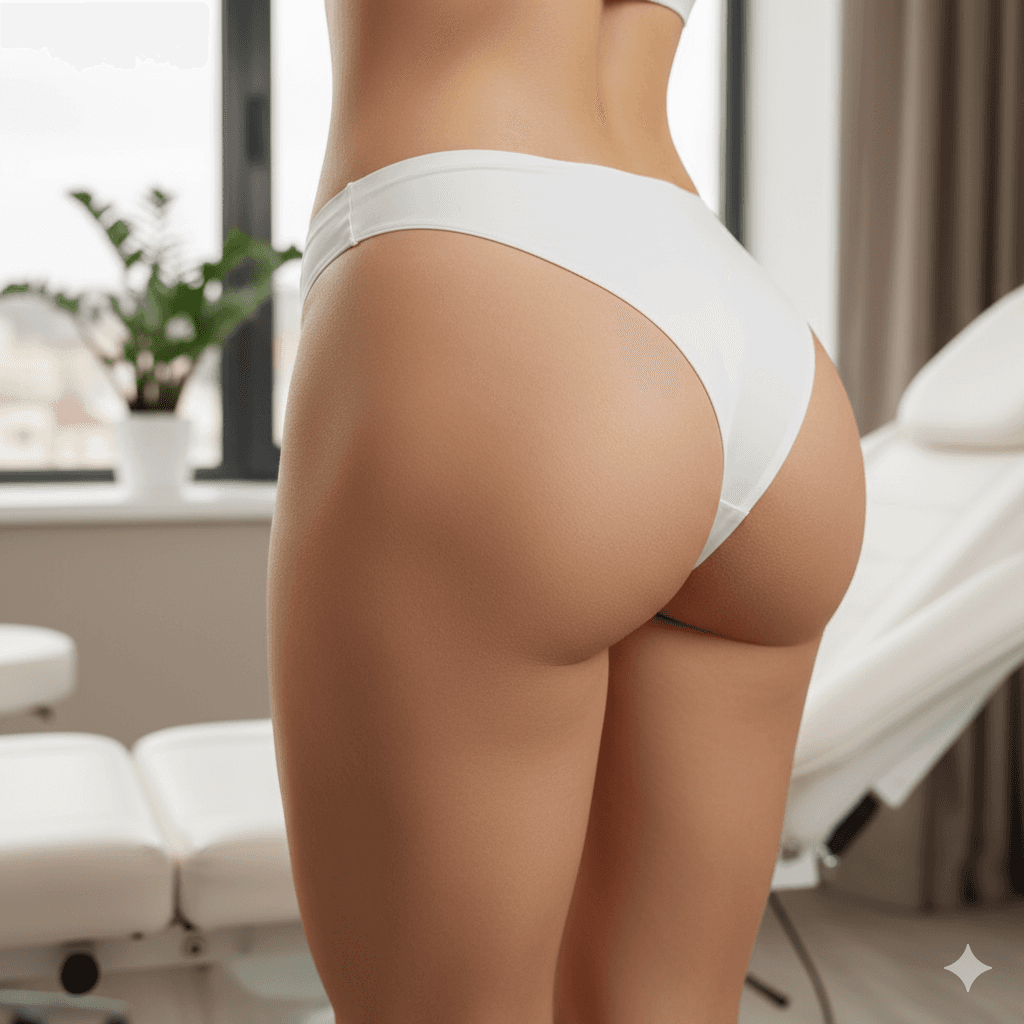
Gluteal Augmentation and Buttock Implants in Abu Dhabi
This comprehensive guide covers the essential information regarding buttock implants, advanced hybrid techniques, and our structured recovery protocols.
1. Butt Implants vs. BBL: Understanding the Indications
The decision between a Brazilian Butt Lift (BBL) and silicone buttock implants is a critical step in surgical planning. While the BBL is widely discussed, it requires a substantial amount of excess body fat to be effective. For patients with a low Body Mass Index (BMI) or an athletic build, buttock implants are often the most viable anatomical option.
Predictability: Implants provide consistent volume and projection. Fat grafted during a BBL can be reabsorbed by the body at varying rates.
Safety Profile: BBL carries specific risks related to fat necrosis and fat embolism, whereas implants primarily involve manageable considerations like seroma and capsular contracture.
2. Advanced Techniques: Hybrid Gluteoplasty
For patients seeking refined body contouring, we utilize the Hybrid Gluteoplasty. This technique integrates two distinct methodologies to optimize the final result:
Central Projection: We insert a silicone implant deep within the muscle to provide a stable foundation of volume and projection.
Tissue Integration: We strategically graft small amounts of your natural fat around the margins of the implant. This creates a tissue camouflage, making the transition between the implant and your native anatomy imperceptible to touch and sight.
3. Surgical Approach: The Intramuscular Technique
Achieving natural and enduring results relies on precise anatomical placement.
Intramuscular Placement: We place the implant deep inside the fibers of the gluteus maximus muscle, rather than superficially. This significantly reduces the long-term risk of lateral migration and extrusion, ensuring structural stability.
The Incision: The procedure utilizes a single, 5 to 7 cm vertical incision hidden within the natural intergluteal cleft. By utilizing multi-layer deep subcuticular sutures, the scar is meticulously managed to remain discreet.
Anesthesia and Comfort: The surgery takes approximately 2 to 3 hours and is performed under general anesthesia. You are monitored by an experienced anesthesiologist, ensuring complete immobility during the muscular dissection.
4. Implant Bioengineering and Material Selection
The gluteal region faces constant shear forces and direct weight when sitting, requiring a resilient elastomer shell and highly cohesive gel that retains its shape.
5. UAE-Adapted Recovery Protocols
Recovering in the Middle East presents specific climatic considerations. Our protocols are designed to ensure a safe and structured healing process across Dubai and Abu Dhabi.
The Summer Post-Op Protocol
Wearing compression garments in high temperatures requires planning. Our protocol includes:
Rotating two sets of compression garments to maintain hygiene.
Strict guidelines to maintain an ambient room temperature of 18-20°C to prevent sweating and incision maceration.
Home Nursing Support
For patients requiring additional assistance, professional support can visit your residence to monitor vitals, assist with lymphatic drainage, inspect the surgical site, and guide bed-to-standing transitions during the first 72 hours.
International Travel Considerations
A common concern for medical tourists is the risk of Deep Vein Thrombosis (DVT) on flights. Our aviation protocol advises:
No flying for the first 1 to 2 weeks post-surgery.
Mandatory use of medical-grade compression socks during any flight.
Prescribed DVT prophylaxis medication when clinically indicated.
6. Treatment Investment
Transparency is a fundamental pillar of our clinical practice. Because every anatomy is unique and requires customized surgical planning, the investment for gluteal augmentation varies based on the specific clinical and structural requirements of each patient.
The cost of the procedure reflects our strict safety protocols, the technical quality of the selected implants, the specialized surgical and anesthesia teams, and the comprehensive infrastructure of the surgical facility. A detailed and precise outline of the investment will be provided exclusively following a thorough clinical evaluation at Elyzee Hospital, where we will define the exact technical approach to achieve your anatomical goals.
7. Safety, Risks, and Surgical Hygiene
All invasive surgeries carry inherent risks. Our clinical protocols are designed to minimize complications such as infection, wound dehiscence, or capsular contracture (scar tissue tightening around the implant).
We utilize the "No-Touch Funnel Technique" during surgery. This prophylactic method ensures the implant avoids skin contact before being placed inside the body, significantly reducing the risk of bacterial contamination.
8. Implant Revision and Corrective Surgery
For patients experiencing complications from previous procedures, we offer corrective and revision operations. Whether addressing implant migration, capsular contracture, or malpositioning, the surgical plan may include total capsulectomies, repositioning, and reconstructive contouring to restore anatomical harmony.
Frequently Asked Questions: Gluteal Augmentation
Understanding the Procedure & Candidacy
1. What is the difference between buttock implants and a Brazilian Butt Lift (BBL)? A BBL uses your body's natural fat, extracted via liposuction, to enhance the gluteal area. It requires a sufficient amount of donor fat. Buttock implants use solid, cohesive silicone devices to provide structural volume and predictable projection, making them ideal for individuals with a lower BMI or athletic builds who lack sufficient fat for a BBL.
2. Am I a suitable candidate for silicone buttock implants? Ideal candidates are healthy individuals looking to enhance the size and shape of their buttocks, particularly those who have experienced massive weight loss, have an athletic physique with low body fat, or are dissatisfied with the natural contour of their gluteal region. A comprehensive clinical evaluation is required to determine anatomical suitability.
3. What is a Hybrid Gluteoplasty? A Hybrid Gluteoplasty is an advanced surgical technique that combines intramuscular silicone implants with targeted fat grafting. The implant provides the core projection and volume, while the grafted fat is meticulously placed around the edges to camouflage the implant, resulting in a highly natural look and feel.
4. How long do buttock implants last? Modern, high-quality cohesive silicone gluteal implants are highly durable and designed to be permanent. Unlike breast implants, they are made with a denser elastomer shell to withstand the biomechanical forces of sitting and walking. While they do not have an expiration date, future anatomical changes or personal preferences may necessitate a revision.
5. Are gluteal implants safe? When performed by a specialized plastic surgeon in an accredited hospital setting, gluteal augmentation is a safe procedure. Utilizing advanced intramuscular placement and strict sterile protocols—such as the "no-touch" technique—significantly mitigates risks like infection or implant migration.
Surgical Technique & Details
6. Where are the incisions placed for buttock implant surgery? The procedure utilizes a single, discreet vertical incision measuring approximately 5 to 7 centimeters. It is strategically placed deep within the intergluteal cleft (the natural crease between the buttocks), ensuring the resulting scar remains hidden even in minimalistic swimwear.
7. Are the implants placed above or below the muscle? For optimal stability and natural aesthetics, the implants are placed intramuscularly—deep within the fibers of the gluteus maximus muscle. This specific placement provides substantial tissue coverage, drastically reducing the risk of the implant becoming visible or migrating over time.
8. What type of implants are used? We exclusively utilize scientifically validated, highly cohesive silicone gel implants from globally recognized manufacturers. These implants are specifically bioengineered for the gluteal region, offering a solid structural shape that cannot leak or rupture like older generation devices.
9. How long does the gluteal augmentation surgery take? The surgical procedure typically requires 2 to 3 hours to complete. It is performed with meticulous attention to detail to ensure perfect symmetry and secure intramuscular placement.
10. What type of anesthesia is required? The procedure is performed strictly under general anesthesia. You will be monitored continuously by a senior anesthesiologist in a hospital environment, ensuring complete comfort, safety, and immobility throughout the surgery.
Recovery & UAE Lifestyle Integration
11. What is the typical recovery time for buttock implants? Initial recovery requires approximately 2 to 3 weeks of strict rest and adherence to post-operative protocols. Most patients can return to light desk work after 14 to 20 days, while strenuous physical activities and heavy lifting must be avoided for 6 to 8 weeks.
12. How long after surgery do I have to wait before sitting down? To protect the incision site and ensure proper tissue integration, direct pressure on the buttocks must be avoided. Patients are instructed to sleep on their stomach or sides and use a specialized off-loading recovery cushion for sitting during the first 2 to 3 weeks.
13. When can I fly after getting butt implants in Abu Dhabi? To mitigate the risk of Deep Vein Thrombosis (DVT), international air travel is restricted for the first 1 to 2 weeks following surgery. When cleared to fly, strict aviation protocols, including mandatory compression garments and prescribed prophylaxis, must be followed.
14. When can I resume my gym routine and heavy lifting? Light cardiovascular exercise (like slow walking) is encouraged early to promote circulation. However, lower body exercises, squats, and heavy lifting that engage the gluteal muscles must be strictly avoided for at least 8 weeks to allow the intramuscular pocket to heal completely.
15. How do I manage the compression garments during the UAE summer? Post-operative compression garments are mandatory to minimize swelling and support the new contours. During the warmer months, we advise maintaining a cool, climate-controlled ambient temperature at home (18-20°C) and utilizing two alternating sets of surgical garments to maintain optimal hygiene and comfort.
Risks, Revisions, & Alternatives
16. What are the potential complications of this surgery? As with any major surgery, potential risks include infection, bleeding, fluid accumulation (seroma), and adverse reactions to anesthesia. Specific to this procedure are risks of capsular contracture (scar tissue tightening), wound dehiscence, or implant malposition, which are heavily mitigated through precise surgical technique and post-operative compliance.
17. Can a buttock implant flip or turn upside down? While possible, this is exceedingly rare with the intramuscular technique. Placing the implant deep within the muscle fibers creates a tight, secure anatomical pocket that restricts rotational movement, unlike superficial placements used in older techniques.
18. Do you perform revision surgeries for previous gluteal augmentations? Yes. Complex reconstructive and revision surgeries are available for patients experiencing complications from procedures performed elsewhere. This includes correcting implant migration, addressing severe capsular contracture, or upgrading older implants to modern cohesive silicone models.
Investment & Consultation
19. How much does a buttock implant procedure cost? Because every patient presents unique anatomical requirements, surgical planning is highly customized. The investment reflects the strict clinical safety protocols, the utilization of advanced implant technology, and the comprehensive hospital infrastructure. A precise structural outline and financial plan are provided following an in-person clinical evaluation.
20. Why is a thorough consultation necessary before surgery? A clinical consultation is the foundation of a safe and predictable outcome. During this evaluation, we assess your tissue elasticity, muscle mass, and skeletal framework. This allows us to select the exact implant dimensions, discuss the surgical approach, and ensure your aesthetic goals align with safe anatomical boundaries.
Schedule Appointment


+971 50 106 7981
Elyzee Hospital
Abu Dhabi, United Arab Emirates
MOHAP License DU63U7WY-040124